Worksun Group Co., Ltd. is one of the most reliable manufacturers and suppliers of pp film faced plywood in China. If you're going to wholesale bulk classy pp film faced plywood, welcome to get pricelist from our factory. All customized products are with high quality and low price.
Introduction
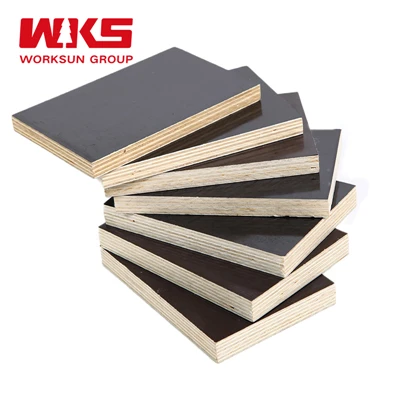
PP film faced plywood – also referred to as PP plastic faced plywood, PP coated plywood, or polypropylene film faced plywood – is a structural plywood panel coated on both faces with a polypropylene (PP) plastic film. The PP layer is bonded to the plywood core under high temperature and pressure, creating a smooth, waterproof, durable surface.
Unlike traditional phenolic film faced plywood, which uses paper-based resin film, PP film faced plywood uses a plastic coating. This plastic layer is tougher, more abrasion-resistant, and less prone to cracking or peeling after repeated use.
The plywood core can be manufactured from various wood species – poplar, eucalyptus, birch, hardwood, or combination cores. Standard panel dimensions are 1220×2440mm (4×8 feet), with thicknesses ranging from 9mm to 25mm – 15mm and 18mm are the most commonly specified for formwork applications.
Key Benefits
Superior durability and high reuse rates. The PP plastic coating is more abrasion-resistant than traditional phenolic film. Contractors report 30 to 50 reuses under normal site conditions, with some systems achieving up to 100 uses when properly maintained. This significantly outperforms standard film faced plywood, which typically delivers only 5–10 uses.
Excellent concrete finish. The PP surface is smooth and glossy, producing clean, high-quality concrete surfaces with minimal defects. The plastic face reduces pinholes and form marks on the concrete surface. The PP film reduces concrete adhesion, making stripping easier and eliminating the need for release agents in most applications.
Waterproof and moisture-resistant. Polypropylene does not absorb moisture. Unlike phenolic film faced panels that can swell or delaminate when exposed to water, PP faced plywood maintains its integrity even in wet conditions. The panels withstand rain, wet concrete, and humid site conditions without degrading. Cut edges should be sealed with waterproof paint to prevent moisture ingress.
Easy to clean and maintain. Concrete does not stick to the PP surface. After stripping, panels can be cleaned simply with water – no release oil, no chemical cleaners, no additional cost. The glossy surface also resists concrete residue build-up.
Lightweight and workable. PP film faced plywood is significantly lighter than steel formwork. It can be cut, sawn, drilled, and nailed using standard woodworking tools. No specialised equipment is required. Most panel sizes are manageable by a single worker.
Cost-effective over the long term. While PP faced plywood has a higher initial cost than standard film faced plywood, the per-use cost is substantially lower. With 30–50 uses, the cost per use is significantly reduced compared to panels with lower reuse rates.
Environmentally friendly. PP film faced plywood is reusable, reducing wood consumption and construction waste. The polypropylene coating is recyclable, and the longer service life reduces the overall environmental footprint compared to single-use or low-reuse alternatives.
Technical Data
|
Parameter |
Specification |
|
Core Material |
Poplar, eucalyptus, birch, hardwood, or combination core |
|
Standard Sizes |
1220×2440mm (4×8ft), 1250×2500mm, 915×1830mm |
|
Thickness Range |
9mm – 25mm (common: 12, 15, 18, 21mm) |
|
Thickness Tolerance |
±0.5mm |
|
Coating |
Polypropylene (PP) plastic film, double-sided |
|
Film Thickness |
0.3mm – 0.5mm |
|
Adhesive Types |
MR, melamine, phenolic, WBP |
|
Density |
500–750kg/m³ (dependent on core species) |
|
Moisture Content |
8% – 16% at time of shipment |
|
Reuse Cycles |
30–50+ (typical); up to 100 with proper care |
|
Bending Strength |
≥30 MPa |
|
Modulus of Elasticity |
≥6000 MPa |
|
Formaldehyde Emission Class |
E0, E1 available |
Specifications
Standard Panel Dimensions
|
Designation |
Width (mm) |
Length (mm) |
Common Thicknesses |
|
4×8ft |
1220 |
2440 |
12, 15, 18, 21mm |
|
5×8ft |
1250 |
2500 |
12, 15, 18, 21mm |
|
3×6ft |
915 |
1830 |
12, 15, 18mm |
Core Species Options
|
Core Type |
Density (kg/m³) |
Common Use |
|
Poplar |
500–550 |
Light-duty, standard formwork |
|
Hardwood/Eucalyptus |
650–750 |
Heavy-duty, high reuse requirements |
|
Birch |
~700 |
High-quality formwork, marine applications |
|
Combi (mixed) |
600–700 |
Balanced performance and cost |
Typical Panel Construction
|
Feature |
Specification |
|
Plies |
7–18 plies (depending on thickness) |
|
Face Coating |
PP plastic film, glossy or anti-slip finish |
|
Edge Sealing |
4-side sealed with waterproof paint |
|
Surface Finish |
Smooth, glossy, non-stick |
Application Scope
PP film faced plywood is specified for concrete construction applications requiring high reuse rates and smooth surface finishes:
- High-rise residential buildings – shear walls, core walls, and slab formwork
- Commercial buildings – office towers, hotels, shopping centres
- Bridge and infrastructure – bridge piers, abutments, tunnel linings
- Water-retaining structures – reservoirs, dams, water treatment facilities
- Precast concrete – factory production of concrete elements
- Industrial facilities – factories and warehouses
- Basement and underground structures – retaining walls and substructures
The product is particularly suitable for projects with repetitive floor layouts and high reuse requirements. The PP film face enables fair-faced concrete finishes that can be left exposed without plastering, saving both material and labour costs.
System Components
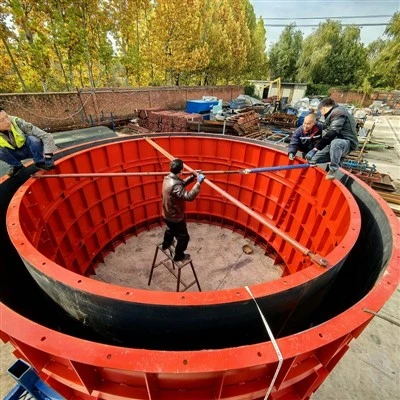
PP film faced plywood functions as a standalone panel within a larger formwork assembly:
Panel Construction:
- Plywood core – multiple veneer layers cross-laminated and bonded with structural adhesive
- PP film coating – polypropylene plastic film, laminated to one or both faces
- Edge sealing – waterproof paint applied to cut edges to prevent moisture ingress
Compatible Formwork Components:
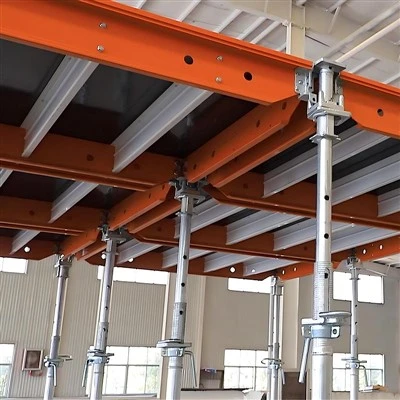
- Timber beams – H20 or other beam profiles as vertical or horizontal supports
- Steel walers – horizontal reinforcement members
- Formwork ties and clamps – panel-to-panel connection hardware
- Adjustable props – vertical support members
Optional Features:
- Pre-drilled holes – for tie rods or fixing points
- Custom dimensions – cut to specific project requirements
- Anti-slip surface – textured PP film for additional traction
- Colour options – green, yellow, grey, blue (custom colours available)
Competitive Advantages
High reuse value. With 30–50 uses under normal site conditions, PP film faced plywood outperforms standard film faced plywood (5–10 uses). The per-use cost is substantially lower over the project lifecycle.
Superior moisture resistance. Unlike phenolic film faced panels, the PP plastic coating does not absorb water, swell, or delaminate when exposed to moisture. Panels can be used in wet conditions and rainy weather without damage.
Clean concrete finish. The PP film surface produces smooth, glossy concrete finishes with minimal surface defects. The non-stick property reduces concrete adhesion and eliminates the need for release agents in most applications.
Easy cleaning and maintenance. Panels clean simply with water after each use. No release oil, no chemical cleaners, no additional cost. The PP surface also resists concrete residue build-up.
Lightweight. PP film faced plywood is significantly lighter than steel formwork, facilitating handling and positioning by a single worker.
Compatibility. The product works with most standard formwork systems – steel frames, timber beams, and aluminium systems – without modification.
Proven technology. PP film faced plywood has been employed in concrete formwork applications across infrastructure, commercial, and residential projects worldwide.
Services
- Custom cutting – panels supplied to specified dimensions
- Edge sealing – waterproof treatment applied to cut edges
- Pre-drilling – holes for tie rods or fixing points
- Technical support – video consultation available within 24 hours
- Delivery – standard panels in 3–5 working days; custom orders in 7–10 working days
- Samples – available for testing; freight to be covered by buyer
FAQ
Q: What is the difference between PP film faced plywood and phenolic film faced plywood?
A: PP film faced plywood uses a polypropylene plastic coating, while phenolic film faced plywood uses a paper-based resin film. The PP coating is more durable, more abrasion-resistant, and less prone to cracking or peeling after repeated use. PP faced panels typically achieve 30–50 uses, compared to 5–10 uses for standard phenolic panels.
Q: How many times can PP film faced plywood be reused?
A: With proper handling and maintenance, PP film faced plywood can be reused 30–50 times under normal site conditions. Some systems achieve up to 100 uses when properly maintained.
Q: Is release agent required?
A: Release agent is not required in most applications. The PP film surface is non-stick by design – concrete releases easily without release agent. For critical finish applications, some contractors apply a light coating, but this is optional.
Q: Can PP film faced plywood be used in wet conditions?
A: Yes. The PP film coating is 100% waterproof. Panels withstand rain, wet concrete, and humid conditions without delamination. Cut edges must be sealed with waterproof paint to prevent moisture ingress.
Q: What core wood types are available?
A: Common core types include poplar (light-duty, standard formwork), eucalyptus/hardwood (heavy-duty, high reuse), birch (high-quality, marine applications), and combi/mixed cores (balanced performance and cost).
Q: Can PP film faced plywood be cut on site?
A: Yes. Standard woodworking tools are appropriate – saws, drills, and nail guns. Cut edges require sealing with waterproof paint or edge sealer to prevent moisture penetration into the core.
Q: How should PP film faced plywood be stored?
A: Store flat, off the ground, in a dry location. Cover stacks to protect from rain. Avoid prolonged direct sunlight – UV exposure can degrade the film surface. Seal cut edges immediately after cutting.
Q: What sizes are available?
A: Standard sizes include 1220×2440mm (4×8ft), 1250×2500mm, and 915×1830mm (3×6ft). Custom sizes are available on request. Thicknesses range from 9mm to 25mm – 15mm and 18mm are the most common for formwork.
Q: Is PP film faced plywood environmentally friendly?
A: Yes. The panels are reusable, reducing wood consumption and construction waste. The polypropylene coating is recyclable, and the longer service life reduces the overall environmental footprint compared to single-use or low-reuse alternatives.
Q: Can custom panel sizes be ordered?
A: Yes – custom dimensions are available on request. Minimum order quantities may apply for non-standard sizes.
Hot Tags: pp film faced plywood, China pp film faced plywood manufacturers, suppliers factory, 3 Ply Yellow Shuttering Panel, Anti Slip Film Faced Plywood, Film Faced Plywood, formwork, PP Film Faced Plywood, wood plywood formwork