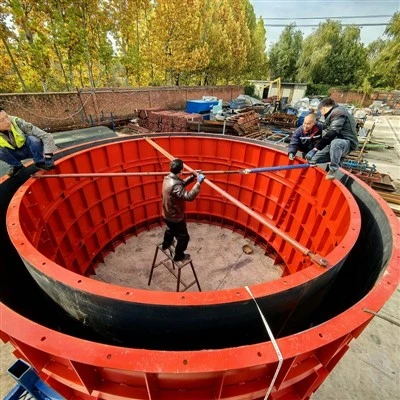
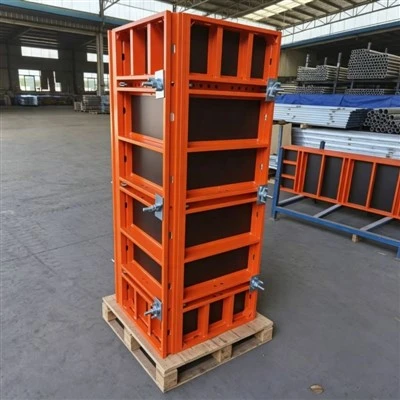
Worksun Group Co., Ltd. is one of the most reliable manufacturers and suppliers of precast concrete house of steel formwork in China. If you're going to wholesale bulk classy precast concrete house of steel formwork, welcome to get pricelist from our factory. All customized products are with high quality and low price.
Introduction

A steel mould that sits in a factory and cranks out concrete house parts. Walls, floor slabs, roof panels, columns – you cast them indoors, then truck them to site and bolt them together. Simple concept, big shift from traditional construction.
The setup came from standard steel formwork used in regular building work. A typical rig has an inner core, outer wall forms, a base plate, and guide rails. You can run it manually, semi-auto, or full hydraulic with vibration – depends on how much automation you want.
Why do it this way? Casting off-site means, faster turnaround, fewer blokes on site, and every piece comes out the same. Look after the steel work and it'll keep going for seven or eight years.
Approved Components
| Component | What It Does |
| Inner core form |
Shapes the inside cavity of the house |
| Outer wall forms |
Shapes the outside walls |
| Base platform |
Holds the whole thing together |
| Guide rails | Moves sections in and out |
| Connections |
Pin joints and trapezoidal threaded bolts – quick to set up and strip down, stays put when locked. |
| Surface treatment |
Special release coating on forming faces. One coat covers multiple pours – no need to reapply every time. |
Technical Specs
| Parameter |
Specification |
|
Material |
Q345B / Q235 steel |
|
Steel grade strength |
Q345B: yield strength ≥345MPa |
|
Mould Structure |
Inner core + outer forms + base + guide rails |
|
Wall Thickness |
140–170mm (14–17cm) |
|
Slab Thickness |
100–130mm (10–13cm) |
|
Dimensional Accuracy |
±1mm |
|
Surface Flatness |
≤1.5mm / 3 metres |
|
Reuse Cycles |
300+ times with proper care |
|
Typical Service Life |
5–8 years |
|
Mould Weight |
20+ tonnes (typical) |
Custom sizes available – typical house sizes run from 3.3m × 6.0m up to 3.6m × 7.2m.
Four Generations of Moulds
Cement house moulds have been through four versions:
| Generation |
What You Get |
| First-generation (traditional |
Simple and cheap, but walls taper – thickness varies about 3cm from top to bottom. |
| Second-generation (vertical) |
Walls are straight, even thickness. Mechanical core pull makes stripping easy. |
| Third-generation (vertically adjustable) |
Walls are straight. Width and length adjust in multiple positions – one mould covers different house sizes. |
| Fourth-generation (fully automatic hydraulic) |
Walls are straight. Hydraulic open/close and self-lock during casting. Electric vibration for compaction. No manual labour needed. |
Product Superiority

Factory work, less site hassle. Casting indoors means no rain delays and less mess on site. All you do on site is prep the footings and slot the pieces together – less wet concrete work, shorter program, fewer trades running around.
Accurate and repeatable. Moulds are cut on CNC machines and welded by laser. Every piece comes off the line the same as the last one. Flat and square enough that you won't be chasing walls with plaster later.
Keeps turning out work. Once the mould is set, you keep pouring. With steam curing, you can get multiple shots through in a day. For big housing jobs, that means production keeps ahead of the installers.
Tough gear. Steel moulds take pounding day in, day out without warping or cracking. With decent maintenance, you'll get 5-8 years out of them. A proper investment if you're in the precast game.
Cuts site labour. Prefab knocks site labour down compared to traditional wet trades. Fewer people on site means lower wage bills, less safety paperwork, and simpler site management.
Adaptable. You can build these moulds to fit custom designs. Third-generation adjustable moulds handle different house sizes without a full rebuild.
Range of Application
This gear is for factory production of concrete house bits. Typical jobs:
● Residential – single units, apartment blocks, rural housing
● Commercial – offices, hotels, shops
● Temporary buildings – site huts, worker camps, emergency shelters
● Villas and low-rise – custom concrete houses
● Modular housing – standard components for quick assembly
● Industrial buildings – small factories, warehouses
Works best on jobs where speed, quality consistency, and cutting site labour are top priorities. Large housing schemes with repeat floor plans are the sweet spot – one mould pumps out hundreds of identical pieces.

System Composition
Mould Build:
- Inner core form – shapes the inside cavity
- Outer wall forms – shape the outside walls
- Base platform – holds the whole thing
- Guide rails and bits – for positioning and moving sections
Mechanisms (depends on generation):
- Mechanical core pull – makes stripping easy
- Hydraulics – auto open/close, self-lock during pouring
- Electric vibration – for compacting concrete (fourth-generation systems)
Surface:
- Special release coating – one coat does multiple pours
Connections:
- Pin joints – quick to put together and pull apart
- Trapezoidal threaded bolts – holds position securely
Optional:
- Adjustable dimensions – one mould for different house sizes
- Custom inserts – for doors, windows, and other openings
Competitive Edge
Cast indoors, assemble on site. Taking concrete work indoors takes weather out of the equation, locks in quality, and shrinks site time. Components turn up ready to fit.
High reuse value. One mould produces thousands of components over 5-8 years. Per-unit cost drops as volume goes up – makes economic sense for big housing jobs.
Labour savings. Fewer people needed on site. Less wet concrete work. Simpler site management, fewer safety headaches.
Quality and precision. CNC and laser-fabricated moulds hold tight tolerances – ±1mm dimensional accuracy. Consistent dimensions mean faster, easier site assembly – no cutting or fettling on site.
Flexible production. From basic fixed moulds to full hydraulic automation – scale to your project size and budget. Adjustable moulds handle different house designs without building new moulds every time.
Proven approach. This has been done in housing construction for decades. The tech is mature, with established standards and practices.
Services
Design advice
free mould configuration and production layout from your house designs and production needs
01
Custom build
non-standard sizes, special configurations, custom mould features – available
02
Technical backup
video call within 24 hours; on-site for complex installations
03
Delivery
standard systems in 20-30 working days; custom orders 25-35 working days
04
Samples
available for testing – freight to be covered by buyer
05
FAQ
Q: What types of precast house steel moulds are there?
A: Four main generations. First-gen is cheap and simple but casts walls with a slight taper – thickness varies about 3cm top to bottom. Second-gen has mechanical core pull – walls come out straight with consistent thickness. Third-gen is vertically adjustable – width and length change for different house sizes. Fourth-gen is fully hydraulic with electric vibration and self-locking – no manual labour needed.
Q: What steel grade is used?
A: Q345B is common – high strength, good toughness, resists deformation under concrete pressure and lifting loads. Q235 for standard applications. Stainless steel for corrosive environments.
Q: How long does a steel mould system last?
A: With proper maintenance – regular checks for deformation, wear, weld cracks, and timely repairs – 5 to 8 years.
Q: How many components per day?
A: Depends on curing. With steam curing, you can get multiple casts done within 24 hours. With ambient curing, the cycle is longer. Also depends on component size and automation level.
Q: Do I need release agent before every pour?
A: Some systems use a special coating on the forming surface. One coat lasts multiple pours – no need to apply before every single cast. Saves time and material.
Q: Can one mould produce different house sizes?
A: Third-generation adjustable moulds can be reconfigured for different widths and lengths. Major design changes may require custom inserts or new mould sections.
Q: How do you maintain the moulds?
A: Regular checks for deformation, moving part wear, weld cracks, and loose bolts. Minor deformation can be corrected; worn parts replaced; weld cracks re-welded. Store moulds properly, not stacked too high to avoid deformation.
Q: Can I get custom moulds for non-standard designs?
A: Yes – custom sizes and configurations available. Steel moulds can be built for practically any design that can be precast as concrete components.
Hot Tags: precast concrete house of steel formwork, China precast concrete house of steel formwork manufacturers, suppliers factory, Adjustable Column Steel Formwork, Cylinder Steel Formwork, Precast Concrete House Of Steel Formwork, Q700 Steel Formwork, steel formwork, Tunnel Formwork