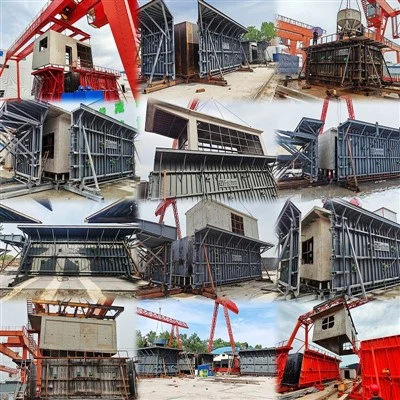
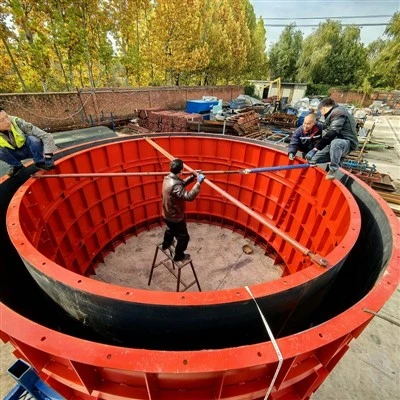
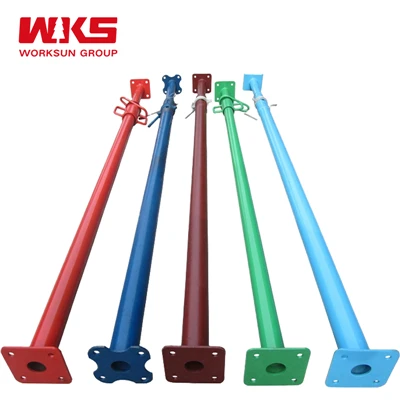
Worksun Group Co., Ltd. is one of the most reliable manufacturers and suppliers of tunnel formwork in China. If you're going to wholesale bulk classy tunnel formwork, welcome to get pricelist from our factory. All customized products are with high quality and low price.
Introduction
Tunnel formwork – also called tunnel form, tunnel shuttering, or tunnel formwork system – is a formwork system used to cast walls and slabs in one operation. Unlike traditional formwork where walls and slabs are poured separately, tunnel formwork creates a complete structural cell in a single pour. The name comes from the shape the formwork makes – a tunnel-like void that gets filled with concrete.
The system consists of two half-tunnel forms placed back-to-back, with each half forming one wall and half the slab. When the two halves are closed together, they create the full room shape. Once the concrete cures, the forms are stripped and moved to the next position.
We manufacture tunnel formwork in both steel and aluminium versions. Steel tunnel formwork offers greater stiffness and load capacity; aluminium tunnel formwork is lighter and easier to handle. Standard systems are available for projects with repetitive layouts – apartments, hotels, student housing, and villas.
Advantages
Walls and slabs in one pour. Tunnel formwork lets you cast walls and slabs together, eliminating the cold joints that occur when pouring them separately. The monolithic structure has fewer joints, which means better watertightness and improved structural integrity.
Fast construction cycles. A typical floor cycle with tunnel formwork is 1 to 3 days – up to three times faster than conventional formwork methods. The system has been shown to cut construction time by 25-30% and reduce costs by up to 10%.
High reusability. Tunnel formwork is designed for hundreds of reuse cycles – 450 to 500 repetitions or more. Steel tunnel formwork in particular can last for many projects with proper maintenance.
Quality and precision. The system produces consistent, high-quality concrete surfaces with tight dimensional tolerances. For tunnel lining applications, surface flatness is held to ≤1mm per 2m, and cross-section accuracy to within ±2mm. The modular, prefabricated components minimise on-site variability and improve dimensional accuracy.
Better structural performance. Monolithic cast-in-place concrete construction offers improved resistance to noise, fire, earthquakes, and high wind loads compared to framed construction.
Cleaner, safer site. Tunnel formwork includes integral working platforms and edge protection systems. Just-in-time deliveries and near-zero material wastage produce a tidier site with associated cost savings and safety benefits.
Two material options. Steel tunnel formwork offers greater stiffness, higher load capacity, and better resistance to deformation. Aluminium tunnel formwork is lighter, easier to handle, and requires smaller cranes.
Features
| Material | Q345 or Q235 steel (steel version); 6061-T6 aluminium alloy (aluminium version) |
| Panel thickness | 3mm – 6mm steel plate (steel version); extruded aluminium panels (aluminium version) |
| Concrete pressure capacity | Up to 80 kN/m² |
| Formwork types | Full-section formwork (walls + crown in one cycle), half-section formwork, invert/crown separate systems |
| Construction | Welded steel frame (steel version) or integrated aluminium frame (aluminium version) |
| Surface finish | Spray finish or powder-coated |
| Operation | Manual, semi-automatic, or hydraulic with mechanical adjustment |
| Movement | Rail-guided or wheel-guided running gear |
| Reuse cycles | 450-500+ times (steel); 300+ times (aluminium) |
| Compatible with | In-situ concrete construction, tunnel lining, building construction |
Specifications
|
Parameter |
Steel Tunnel Formwork |
Aluminium Tunnel Formwork |
|
Material |
Q345 / Q235 steel |
6061-T6 aluminium alloy |
|
Panel Thickness |
3mm – 6mm |
Extruded aluminium panels |
|
Concrete Pressure |
Up to 80 kN/m² |
60 – 80 kN/m² |
|
Formwork Types |
Full-section / Half-section |
Full-section / Half-section |
|
Frame Construction |
Welded steel |
Integrated aluminium |
|
Surface Finish |
Spray / Powder-coated |
Powder-coated / Anodized |
|
Reuse Cycles |
450-500+ times |
300+ times |
|
Typical Weight |
Heavier – higher load capacity |
Lighter – easier handling |
|
Operation |
Manual / Hydraulic |
Manual / Hydraulic |
Standard tunnel formwork lengths: 6m, 8m, 10.5m, 12m – custom lengths available on request.
Typical house sizes range from 3.3m × 6.0m up to 3.6m × 7.2m.
Application Scope
Tunnel formwork is used in two main applications:
Building construction:
- Apartments and condominiums
- Hotels and student housing
- Villas and low-rise residential
- Repetitive floor layouts (450-500+ repetitions)
Tunnel and infrastructure construction:
- Road and railway tunnels – full-section or half-section lining
- Hydroelectric and water conveyance tunnels
- Subway and underground structures
- Cut-and-cover tunnel construction
The system is best suited for projects with repetitive layouts and standardised floor plans – the more repetitions, the better the economics.
System Components
A complete tunnel formwork system consists of:
Formwork Structure:
- Half-tunnel forms – each half forms one wall and half the slab
- Full-section forms – for tunnel lining applications, forming walls, crown, and invert in one cycle
- Corner sections – internal and external corners
- End formwork – for closing the formwork at each end
Support and Movement:
- Support frame – load-bearing structure that carries self-weight, fresh concrete pressure, and assembly forces
- Hydraulic system – for opening, closing, fine adjustment, and striking
- Running gear – rail- or wheel-guided movement
- Adjustable jacks and screws – for levelling and positioning
Accessories:
- Working platforms – safe access for reinforcement, embedded items, and concreting
- Guardrails and fall protection – edge protection systems
- Tie rods and couplers – for panel tensioning
- PVC sleeves – for tie rod extraction
Competitive Edge
Speed. Casting walls and slabs together in one operation eliminates the waiting time between pours. A 1-3 day floor cycle is achievable – up to three times faster than conventional methods.
Quality. The monolithic construction has fewer joints, which improves watertightness and structural integrity. The system produces consistent, high-quality concrete surfaces with tight tolerances.
Cost-effective for repetitive projects. Tunnel formwork has a higher upfront cost than traditional systems, but the per-use cost drops sharply with volume. For projects with 450-500 repetitions, it becomes more economical than other systems.
Strong, durable structures. Monolithic cast-in-place concrete offers better seismic resistance, fire resistance, and sound insulation than framed construction.
Versatile. Works for both building construction and tunnel lining applications. Available in steel and aluminium versions to suit different project requirements.
Proven technology. Tunnel formwork has been used in construction for decades. The technology is mature and well-established.
Services
Design consultation
free formwork layout and system configuration from your drawings
01
Custom fabrication
non-standard lengths, cross-sections, and special configurations – available on request
02
Technical support
video consultation within 24 hours; on-site for complex projects
03
Delivery
standard systems in 20-30 working days; custom orders 25-35 working days
04
Samples
available for testing – freight to be covered by buyer
05
FAQ
Q: What is tunnel formwork?
A: Tunnel formwork is a formwork system that casts walls and slabs in one operation – a complete structural cell in a single pour. The name comes from the tunnel-like shape the formwork makes.
Q: How does it work?
A: Two half-tunnel forms are placed back-to-back. Each half forms one wall and half the slab. When closed together, they create the full room shape. Concrete is poured, cured, then the forms are stripped and moved to the next position.
Q: What is the difference between steel and aluminium tunnel formwork?
A: Steel offers greater stiffness, higher load capacity, and better resistance to deformation. Aluminium is lighter, easier to handle, and requires smaller cranes. Steel is typically used for heavy-duty tunnel lining applications; aluminium is more common in building construction.
Q: How many times can tunnel formwork be reused?
A: Steel tunnel formwork can be reused 450-500 times or more with proper care. Aluminium systems typically achieve 300+ cycles.
Q: What projects is tunnel formwork best for?
A: Projects with repetitive layouts and standardised floor plans – apartments, hotels, student housing, and villas. Also used for road, railway, and hydroelectric tunnel lining.
Q: How fast is tunnel formwork compared to traditional methods?
A: A 1-3 day floor cycle is achievable – up to three times faster than conventional formwork. Construction time can be reduced by 25-30%.
Q: What concrete pressure can tunnel formwork handle?
A: Up to 80 kN/m² of concrete pressure.
Q: What sizes are available?
A: Standard lengths are 6m, 8m, 10.5m, and 12m. Custom lengths are available on request.
Q: Can I get custom tunnel formwork for non-standard tunnel cross-sections?
A: Yes – custom cross-sections and special configurations are available on request.
Q: How are the forms moved between positions?
A: Tunnel formwork uses rail-guided or wheel-guided running gear. Hydraulic systems are used for opening, closing, and fine adjustment.
Hot Tags: tunnel formwork, China tunnel formwork manufacturers, suppliers factory, Adjustable Column Steel Formwork, Cylinder Steel Formwork, Precast Concrete House Of Steel Formwork, Q700 Steel Formwork, steel formwork, Tunnel Formwork